

Admiral Jayanath Colombage Participated in International Seminar on BBNJ
Time: 2026-11-17 Author: RCAS
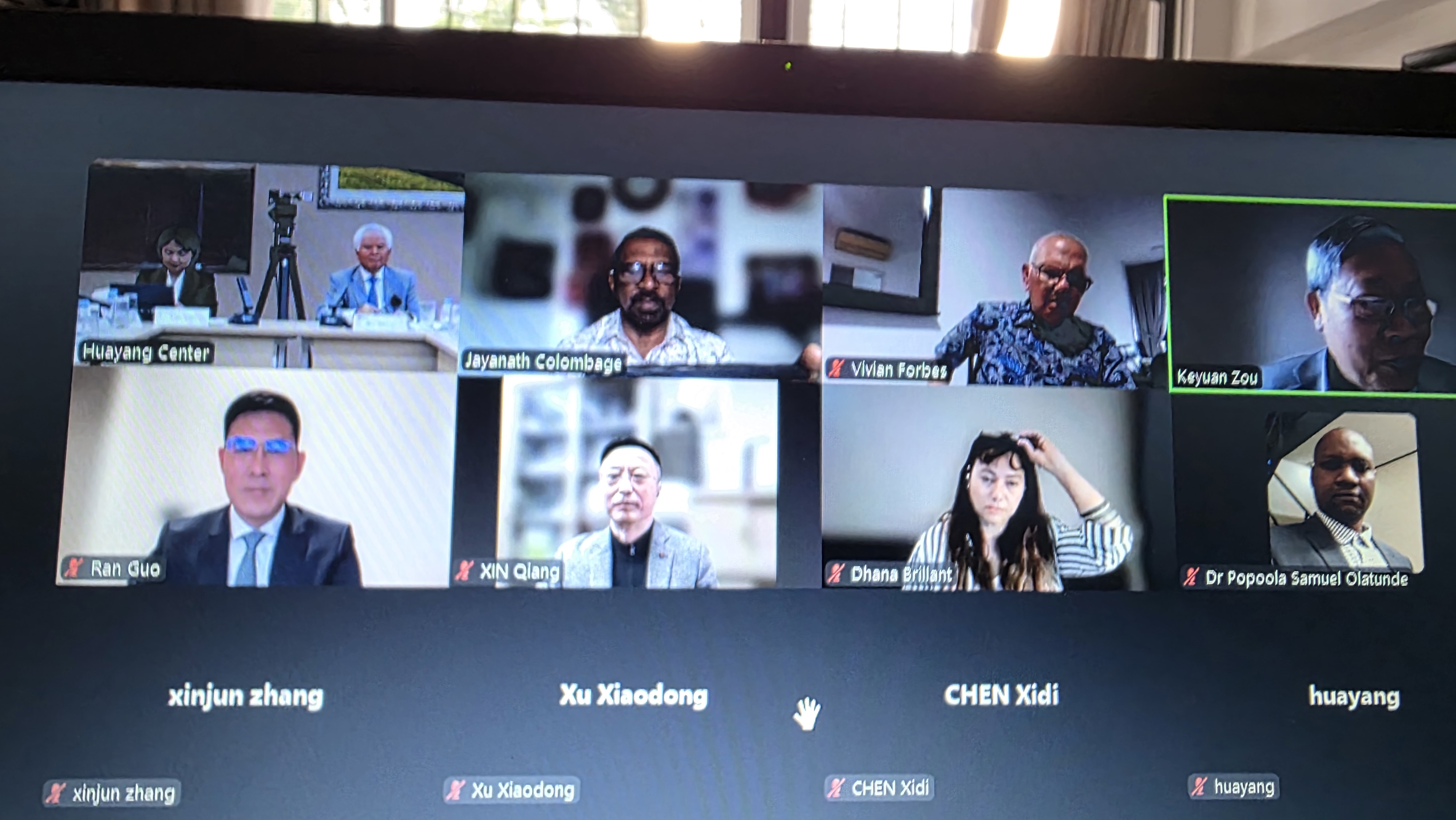
Admiral Prof. Jayanath Colombage, a Non-resident Senior Fellow of Hong Kong Research Centre for Asian Studies, participated in an International Virtual Seminar on the BBNJ to discuss about current developments and prospects for host selection for BBNJ secretariat, organized by the Huayang Centre for Maritime Cooperation and Ocean Governance based in Haikou China. There were more than one hundred scholars and practitioners from Asia, Africa, Australia and South Pacific countries participated in this event. The BBNJ Agreement entered into force on 17 January 2026. Its first Conference of the Parties (COP1) is scheduled for 11–22 January 2027, in New York, where institutional arrangements, including the Secretariat's seat, are to be addressed. There are two competing proposals which illustrate the geopolitical and institutional dimensions of the decision.
China has proposed Xiamen as the Secretariat's headquarters, emphasizing its maritime infrastructure, blue economy, scientific capabilities, and operational readiness. Chile and Belgium announced a joint candidature proposing Valparaíso for the Secretariat, with Brussels supporting the Clearing-House Mechanism and potentially subsidiary-body meetings, subject to COP decisions. The emerging competition raises an important issue: Should the Secretariat's location be determined primarily by technical efficiency, geographical representation, development equity, or geopolitical considerations? Developing countries should have a meaningful voice in decisions concerning marine biodiversity, rather than merely implementing rules developed by technologically advanced states.
Admiral Prof. Colombage highlighted three criteria for evaluation: Access to marine science and technology: Research vessels, deep-sea sampling, marine biotechnology, genomic databases, and advanced ocean monitoring remain unevenly distributed globally. Fair distribution of benefits: Marine genetic resources may generate considerable scientific and commercial value. The BBNJ framework should ensure that developing countries benefit from research, innovation, and associated economic opportunities.
Hosting the Secretariat in a Global South country could provide an important symbolic contribution to addressing these inequalities. However, institutional location alone cannot guarantee equitable outcomes. Admiral emphasized that a credible Global South position should emphasize: transparent and inclusive decision-making by the Conference of the Parties, affordable participation for least developed countries and small island developing states, equitable access to marine scientific research and technology, effective administration without unnecessary institutional fragmentation. Independence of the Secretariat from the political interests of its host, balanced geographical representation in staffing, scientific bodies, and capacity-building programmes.
Admiral concluded stating that the BBNJ Agreement represents a major development in international ocean governance. However, its success will depend not simply on where its Secretariat is located, but on whether the institutions created under the Agreement operate effectively, inclusively, and independently. For the Global South, the fundamental objective should be to move from limited participation towards meaningful influence in the governance of the global ocean commons. The ultimate test is not whether the Global South hosts the BBNJ Secretariat, but whether the BBNJ system delivers genuine equity, scientific inclusion, capacity-building, and sustainable ocean governance for all nations.