

Admiral Jayanath Colombage Participated in SGMCOG
Time: 2026-11-11 Author: RCAS
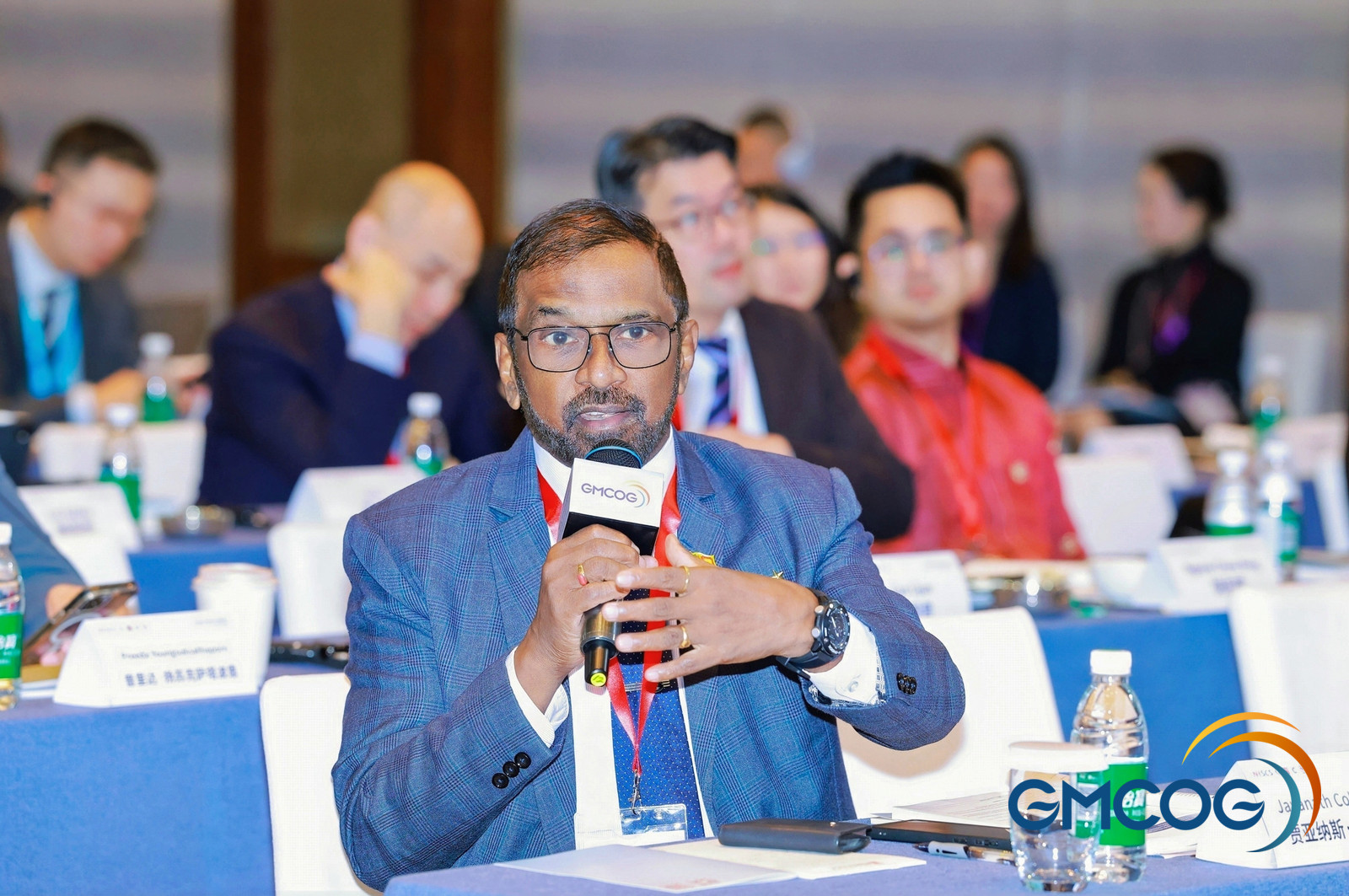
Admiral Prof Jayanath Colombage, a Non-resident Senior Fellow of Hong Kong Research Center for Asian Studies, participated in 7th Symposium on Global Maritime Cooperation and Ocean Governance (SGMCOG) held in Sanya, China from 6th to 7th November 2026. This event was organized by the Huayang Centre for Maritime Cooperation and Ocean Governance and National Institute for South China Sea Studies (NISCSS).
Established in November 2020, the SGMCOG is dedicated to providing a distinguished platform for engaging, thought-provoking dialogues among scholars and practitioners from diverse backgrounds worldwide. Its primary objectives are to advance academic research and foster exchange on maritime cooperation and ocean governance.
The 7th SGMCOG endeavoured to emphasize issues related to global ocean governance from a multilateral perspective, as well as explore maritime cooperation within and beyond the South China Sea region. There were nearly 400 participants representing thirty countries and international organizations in this year’s symposium.
Admiral Prof. Jayanath Colombage presented “Building Cooperative Maritime Security Architectures: Comparative Lessons from the Persian Gulf and South China Sea”. He stated that the Persian Gulf and the South China Sea are among the world’s most strategically significant maritime regions. Both are critical to international trade, energy transportation and global supply chains, while also experiencing geopolitical rivalry, territorial and jurisdictional disputes, naval competition, and the growing involvement of extra-regional powers. Despite their distinct historical and geopolitical contexts, both regions demonstrate the limitations of relying primarily on military capabilities and deterrence to ensure sustainable maritime security.
Admiral Colombage further examined the maritime security dynamics of the Persian Gulf and the South China Sea, with particular attention to mechanisms for confidence building, crisis communication, maritime domain awareness, incident prevention and functional cooperation. It argues that unresolved geopolitical disputes need not prevent states from developing practical forms of maritime cooperation. Measures such as hotlines, rules of engagement, coast-guard cooperation, search and rescue, information sharing, protection of commercial shipping, and mechanisms for preventing unintended encounters can contribute to reducing risks and building mutual confidence.
He furthermore illustrated the roles of regional institutions, international maritime law, and regional ownership in developing cooperative security architectures. The experience of the Persian Gulf highlights the importance of deconfliction and maritime safety in an environment of intense strategic rivalry, while developments in the South China Sea demonstrate the potential of regional dialogue, ASEAN-led mechanisms and practical confidence-building measures.
Admiral prof. Colombage concluded that an effective maritime security architecture should not seek to eliminate geopolitical competition but should create mechanisms to manage it. These comparative lessons have wider relevance for the Indian Ocean and Indo-Pacific, where inclusive, rules-based and cooperative approaches are essential for maintaining freedom of navigation, maritime stability, economic connectivity and sustainable use of the oceans.