
Admiral Jayanath Colombage Participated in Phewa Dialogue
Time: 2026-04-05 Author: RCAS
The Phewa Dialogue is a premier academic dialogue platform jointly initiated and organized by the China Center for South Asia Studies (CCSAS) at Sichuan University and Tribhuvan University of Nepal. It aims to bring together think tanks, scholars, and policy practitioners from China, South Asia, and surrounding regions to engage in in-depth exchanges on key strategic issues concerning regional development, foster mutual understanding, build consensus, and promote cooperation. The second edition of the “Phewa Dialogue” was conducted in Chengdu, China on 26-27 March 2026.
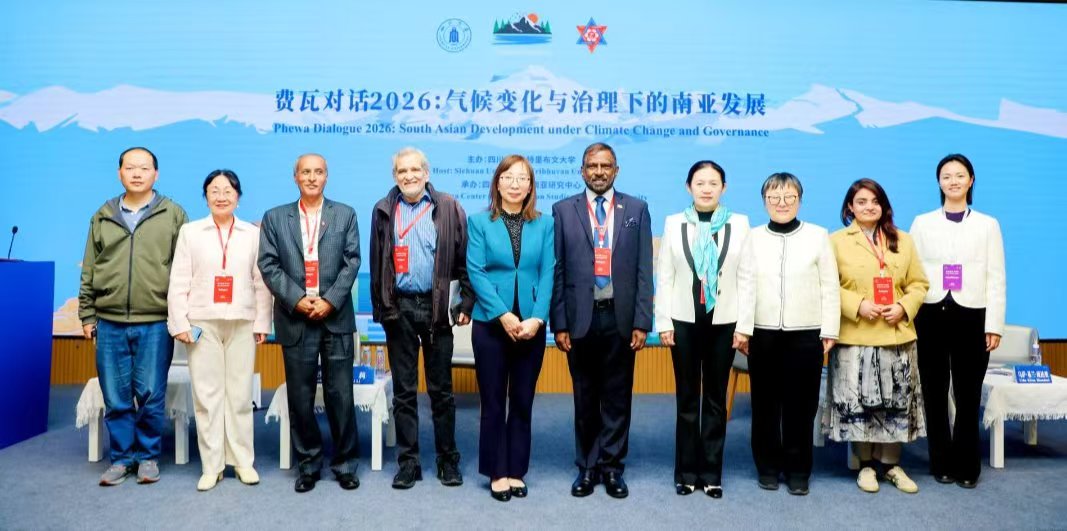
This edition focused on one the most pressing issues in global and regional development today—'climate change and its governance’—to jointly explore new concepts and pathways for sustainable development in South Asia. Against the backdrop of increasingly severe global climate challenges, exploring adaptive and mitigative governance strategies is crucial for the sustainable development of South Asia.
Admiral Colombage, a Non-resident Senior Fellow of Hong Kong Research Center for Asian Studies, presented a paper titled “Regional Economic Integration as a Pathway to Sustainable Growth in South Asia: A Sri Lankan Perspective”. Admiral indicated that South Asia is home to nearly one-quarter of the global population and possesses immense economic potential. Yet, despite these advantages, it remains one of the least economically integrated regions in the world. Trade within the region accounts for only a small share of total trade compared to regions such as Southeast Asia or Europe. This limited integration constrains economic growth, reduces resilience to external shocks, and weakens the region’s capacity to respond collectively to climate change.
HE further stated that regional economic integration offers an important framework through which South Asian countries can pursue sustainable development. Integration can promote trade expansion, increase investment flows, generate employment opportunities, and facilitate technological transfer. More importantly, under conditions of climate change, regional cooperation can support shared solutions in areas such as renewable energy, disaster management, food security, and sustainable infrastructure. However, progress toward integration in South Asia has been uneven. Institutions such as the South Asian Association for Regional Cooperation (SAARC) have created important platforms for dialogue and cooperation. Yet political tensions, trade barriers, and institutional weaknesses have limited their effectiveness.
Similarly, sub-regional initiatives such as the Bay of Bengal Initiative for Multi-Sectoral Technical and Economic Cooperation (BIMSTEC) offer promising opportunities for practical cooperation in trade, connectivity, and energy. These frameworks are particularly important in addressing shared environmental challenges across the Bay of Bengal region.
Climate change makes this cooperation even more urgent. South Asia is among the region’s most vulnerable to rising sea levels, extreme weather events, and changing rainfall patterns. These environmental risks threaten agriculture, fisheries, tourism, and coastal infrastructure. No single country in South Asia can effectively address these challenges alone. Regional solutions are necessary. Shared investments in climate-resilient infrastructure, renewable energy systems, and sustainable transportation networks can reduce vulnerability and enhance long-term growth.
In recent years, new international initiatives have emerged that may support regional development. One important example is the Belt and Road Initiative, which focuses on infrastructure connectivity across Asia and beyond. Investments in ports, transport corridors, and energy systems can improve regional integration and support sustainable development. Another initiative is the Global Development Initiative, which emphasizes inclusive growth, poverty reduction, and sustainable development. These initiatives offer opportunities for South Asian countries to strengthen economic cooperation and improve resilience to climate change.
Admiral Colombage concluded that regional economic integration represents a viable pathway toward sustainable development in South Asia. Under the pressures of climate change and economic uncertainty, cooperation is no longer optional — it is a necessity. With effective governance, improved connectivity, and shared commitment, South Asia can move towards a more integrated and resilient future. Sri Lanka, through its strategic location and constructive engagement, has the potential to play an important role in this transformation.
Admiral Colombage also moderated the session ‘Achieving Sustainable Development- Transforming Traditional Lifestyles’ in this Phewa Dialogue.