

China's South Asia Vision through Bangladeshi Eyes
Time: 2026-03-26 Author: Sujit Kumar Datta
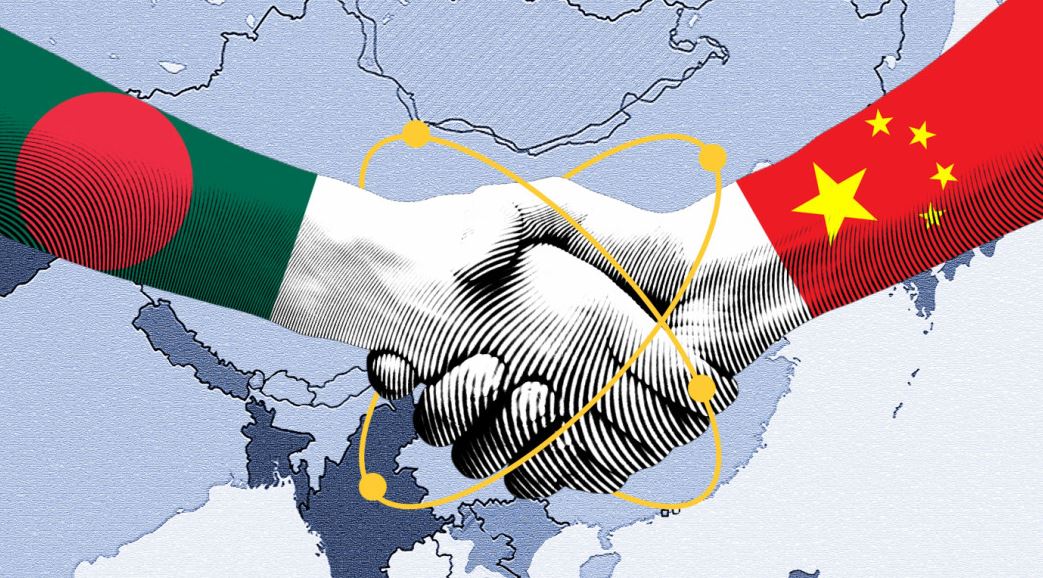
2026 marks the 50th anniversary of the diplomatic relationship between China and Bangladesh. The relationship has also been leading to careful strategy integration grounded in development cooperation, infrastructure connectivity, and mutual political trust. Nevertheless, this attitude towards the Chinese vision of South Asia has become more nuanced, pragmatic, and strategically recalibrated amid the region’s rapid geopolitical shift.
▲Photo: Collected.
Conventionally, Bangladesh has coexisted under the dictum of friendship to everyone and malice to none, which has been the nation’s foreign policy principle since Bangladesh’s independence. This policy helped Dhaka balance its relations with the core powers. However, following the shift in politics with Hasina regime’s fall on August 5, 2024, the current regime has also adopted a recalibrated foreign policy direction – Bangladesh First. With this shift, the denial of historical alliances is absent, but it is a statement of national interest, strategic independence and diversified cooperation in a more multipolar world.
Acceptance of China’s foreign policy can be reflected in changing understandings of key aspects in Bangladeshi terms. According to its Five Principles of Peaceful Coexistence: the mutual respect of sovereignty, non-aggression, non-interference, equality, and peaceful coexistence, China is being established as a partner that is interested in developing, not in the political conditionality. Their more globalised strategy of forming a community in which they could share their future as mankind resembles the aspirations of the majority of developing countries, which want to develop in an inclusive process without being influenced by foreigners.
The Belt and Road Initiative (BRI) has been the most visible type of Chinese intervention in South Asia. Bangladesh has emerged as a key node in this network, benefiting from megaprojects in infrastructure development, energy relations, and industrial investments. It has been part of Bangladesh’s developmental trend, with Chinese-supported projects linking its power plants and special economic zones with bridges and highways. These are not only trade transactions to Dhaka, but also vehicles for long-term structural change.
The Chinese view of South Asia is not understandable out of the context of the region. One of the most important political and social changes that has taken place in South Asia today, partially, is a result of a new generation of young people who are becoming more politically conscious, the so-called Gen Z movement. The young grassroots movements in Sri Lanka, Nepal, and even Bangladesh itself have disrupted the traditional political structure and are demanding greater accountability, openness, and economic opportunities. They are changing the internal politics and, hence, the priorities of foreign policy.
This changing environment has been shaping China, with increased emphasis on stability, economic cooperation, and non-engagement. The rest of South Asia has positive ties with Beijing and is part of the BRI project. The exception is India, which has reservations about the initiative owing to sovereignty issues and, more importantly, strategic concerns. Nevertheless, it would be wrong to describe the relations between China and India solely in terms of opposition.
The two countries have been engaged in bilateral multilateralism through the BRICS and the Shanghai Cooperation Organisation, though there has been historical friction along the border as a sign of mutual South-South cooperation interests and an overhaul of international governance. The linking of India to other states is an indissoluble partnership, driven by geography, cultural affinity, and interdependence with other economies. In the meantime, China offers capital for development, infrastructure, technology, and alliances that are in such demand. The first policy of Bangladesh is to strike a balance between avoiding excessive reliance on any single partner and fulfilling national interests to the fullest.
Geography plays a major role in this strategy calculus. The country lies between South and Southeast Asia, giving it a strategic location to connect the two regions. Regarding China, the established good relationship with Bangladesh will help the country become more active in the Bay of Bengal region and increase access to sea routes. This geographical advantage is translated into the potential to make it a regional business, logistics, and investment center, as exemplified by Bangladesh and other related policy issues related to the deepening of relations between China and Bangladesh. Debt sustainability, project transparency, and environmental impact will be considered to ensure the development’s impacts are inclusive and sustainable. Besides this, Bangladesh must take care not to lose its strategic independence, and foreign relations must not override its national interests in the long term.
As the largest economy and the most powerful state in terms of population, military force, and geopolitical impact, India continues to shape the strategic environment in which Bangladesh must operate. The same terms that India and China have preferred have been popular among most South Asian countries, such as Bangladesh, because they know they must cooperate with the two powers to establish themselves in the region and thereby develop their economies. On the contrary, it is a set of possibilities and threats that must be overcome with the aid of the tactical vision and cunning. This will work to the extent that the country strikes a balance between its Chinese operations and its developmental concerns without compromising its balanced and autonomous foreign policy.
Reflecting on 50 years of the development of relations between the two countries, one could say that the future of relations between China and Bangladesh is tied to practicality, characterised by a respectful attitude towards each other and mutual interest in development. It is not a shift in ideals but rather an increment in demands and an interest-based policy towards foreign affairs, which changed the friendship with all. In the broader context of multipolarity, China’s perception of South Asia in Bangladesh’s mind can be understood. The potential of the economic development and integration in the region is huge, but it will need to be done in a wise way that will not affect the national sovereignty, strategic balance and sustainability. The opportunity and problem sides here, in the case of Bangladesh, are to actualise such a vision through inclusive development and leadership in the region in an ever-integrating world.
This article was first published at Times of Bangladesh, Bangladesh, March 25, 2026,
https://tob.news/chinas-south-asia-vision-through-bangladeshi-eyes/.
