

The Turbulent Pakistan-Afghanistan Border
Time: 2026-03-17 Author: Zahid Anwar
The Pakistan–Afghanistan border, stretching over 2,600 kilometers, is far more than a geopolitical demarcation. It is a living corridor of shared history, cross-border kinship, commerce, migration, and, at times, conflict.
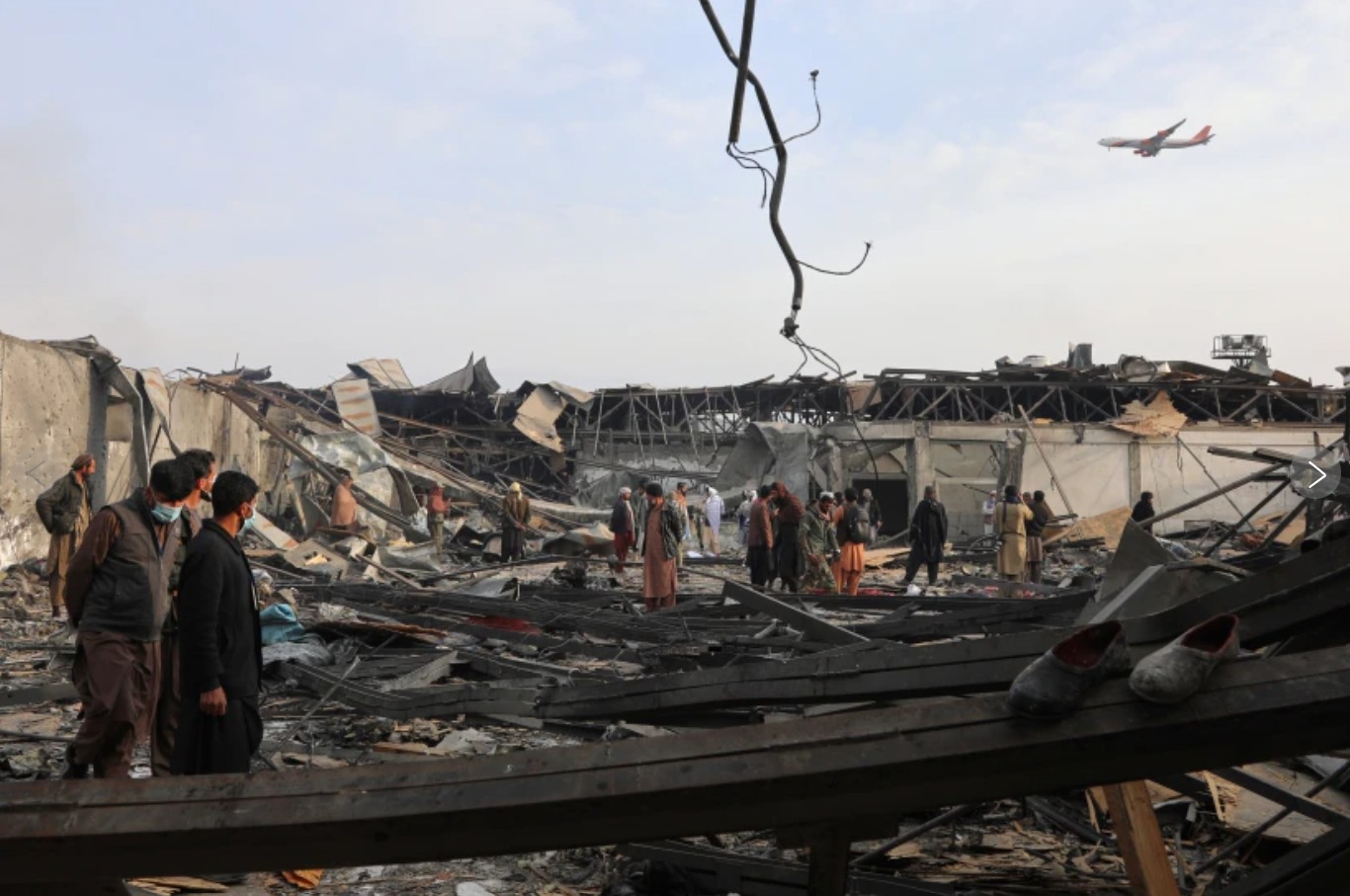
▲AP News.
For decades, turbulence along this frontier has shaped the domestic stability of both countries and influenced the broader security architecture of South and Central Asia. The current military tensions in the Pakistan-Afghanistan border region has escalated to an “open war” between the two neighbors.
Nonetheless, Tahir Andrabithe, spokesperson of the Ministry of Foreign Affairs of Pakistan, has called for a rational and logical approach to the crisis, maintaining that sensitive issues such as border fencing and border management should be settled through high-level dialogue rather than kinetic confrontation.
Multiple factors of the instable Pakistan-Afghanistan border
Border instability between Pakistan and Afghanistan stems from a complex interplay of historical, political, security, and socio-economic factors.
First, the legacy of contested perceptions regarding the Durand Line has long cast a shadow over bilateral relations. While Pakistan considers it an internationally recognized border, successive Afghan governments have historically expressed reservations. This political sensitivity has complicated formal border regulation, fencing, and documentation regimes. In the absence of mutually agreed mechanisms, mistrust has periodically escalated into diplomatic tensions and border closures, disrupting trade and people-to-people contact.
Second, militant groups operating in the borderlands have significantly aggravated instability. Over the past two decades, various non-state actors—including factions of the Tehreek-e-Taliban Pakistan (TTP), the Islamic State Khorasan Province (ISKP), and other armed networks—have exploited rugged terrain and porous crossings to launch cross-border attacks. The mountainous geography and historically semi-autonomous tribal belt facilitated unregulated movement, making counterterrorism coordination exceptionally challenging. At times, each side has accused the other of insufficient action against militants allegedly using its territory, reinforcing a cycle of suspicion.
Third, the post-2021 political transition in Afghanistan introduced new uncertainties. The withdrawal of foreign forces and the emergence of an interim administration altered the regional security landscape. Although expectations of improved bilateral coordination arose, institutional mechanisms for sustained cooperation are still evolving. Changes in Afghanistan’s governance structure have also affected border policing capacities, intelligence-sharing frameworks, and customs regulation systems.
Fourth, socio-economic pressures further complicate border management. Millions of Afghans have resided in Pakistan over the past four decades due to prolonged conflict. Refugee management, undocumented migration, smuggling networks, and informal cross-border trade present complex humanitarian and administrative challenges. Economic hardship on both sides increases the appeal of illicit activities, including narcotics trafficking and arms smuggling, which undermine state authority.
Finally, external geopolitical competition has at times intensified bilateral mistrust. Rivalries among major powers have historically turned Afghanistan into a theater of proxy contestation. Such dynamics have influenced threat perceptions in Islamabad and Kabul, complicating direct engagement and reinforcing defensive security postures.
In short, turbulence along the border does not arise from a single source; it reflects overlapping layers of historical grievances, security dilemmas, economic fragility, and geopolitical pressures. Addressing these structural drivers requires institutionalized cooperation rather than episodic crisis management.
Border management between Pakistan and Afghanistan
First, counterterrorism coordination along this border has direct implications for South Asian stability. Militant networks often transcend national frontiers, influencing broader regional security environments. Effective cooperation can reduce safe havens and disrupt extremist mobility, thereby contributing to collective peace.
Second, regional economic integration depends on a stable Afghanistan. Connectivity initiatives such as the China–Pakistan Economic Corridor (CPEC) and broader Belt and Road cooperation envision Afghanistan as a bridge linking Central and South Asia. Energy projects like the Turkmenistan–Afghanistan–Pakistan–India (TAPI) pipeline similarly require secure transit corridors. Without stable border management, such projects remain vulnerable to disruption.
Third, improved Pakistan–Afghanistan cooperation can reduce the risk of proxy competition in South Asia. As bilateral mistrust diminishes, the space for external manipulation narrows. A stable frontier can foster confidence-building measures and encourage multilateral engagement under frameworks such as the Shanghai Cooperation Organization (SCO).
Fourth, humanitarian stability carries regional consequences. Prolonged refugee flows and irregular migration can strain neighboring states. Structured border governance promotes orderly mobility, reduces sudden demographic shocks, and supports regional stability. Ultimately, sustainable peace in South Asia requires stabilizing its most fragile fault lines. The Pakistan–Afghanistan border is one such critical line. Transforming it from a zone of friction into a corridor of connectivity would benefit the entire region.
Finally, regional multilateralism can reinforce bilateral efforts. Engagement within broader regional platforms can provide technical expertise, promote best practices, and embed Pakistan–Afghanistan cooperation within a wider architecture of collective security.
Conclusion
The turbulence along the Pakistan–Afghanistan border reflects decades of historical complexity, security dilemmas, and socioeconomic fragility. Yet it also presents an opportunity. Through sustained political will, institutionalized cooperation, technological modernization, economic integration, and community engagement, the frontier can gradually be stabilized.
Guided by principles of common and cooperative security from the Global Security Initiative (GSI) proposed by Chinese President Xi Jinping, Pakistan and Afghanistan have the capacity to transform their border from a fault line into a foundation for partnership. Stability along this frontier would send a powerful message to South Asia and beyond: that neighbors, through dialogue and shared responsibility, can convert challenges into opportunities. In an interconnected world, shared security remains the most reliable path toward shared prosperity.
The article was first published at RCAS, Hong Kong, March.17, 2026.
 <RCAS Commentary-The Turbulent Pakistan-Afghanistan Border>