

China-South Asia's Indispensable Geographical Bond
Time: 2026-03-17 Author: Sujit Kumar Datta
China is technically not considered a member of South Asia, a regional bloc defined by the United Nations and other international bodies as comprising Afghanistan, Bangladesh, Bhutan, India, the Maldives, Nepal, Pakistan, and Sri Lanka. And to regard China as something not of this dynamic region is to neglect one of the most important geographical facts of Asia: that China and South Asia are indissoluble as by sea, by land, and the interlacing scenery that has given them their past, their present, and their future. This kind of relationship built upon place is not a cartographical appendix, but one of the forces that hold the region together, enabling cooperation, cultural sharing, and economic integration.
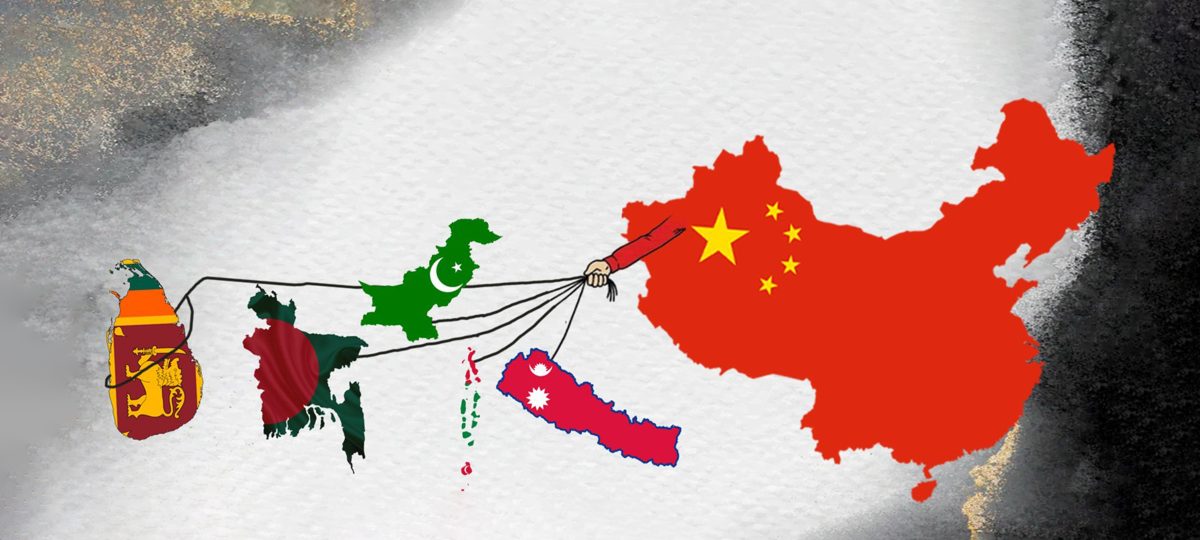
▲Photo: Collected.
Of the eight South Asian nations, five are directly neighboured by China: Afghanistan, Bhutan, India, Nepal, and Pakistan. These borders cut across some of the most desolate and legendary scenery in the world, the bleak plateaus of the Hindu Kush and the high Himalayan mountain ranges. Such paragraphs of mountain are those which, for centuries, acted as bridges rather than barriers. The Silk Road, which existed in the past, passed through the Karakoram and the Himalayas, India, Pakistan, and many other markets, connecting China with them. It is these borders, now, that host the great infrastructure projects such as the China-Pakistan Economic Corridor (CPEC), linking the western Xinjiang region of China to the Gwadar Port in Pakistan, creating a key trade route that bypasses the bottlenecks of maritime routes. The geographical reality of the same limits cannot render dialogue and cooperation impossible in some locations where political tensions may, from time to time, have strained relations. For example, China and India, despite the periodicity of border disputes, have a vast trade relationship and collaborate on issues such as transboundary water management, which is needed because the vast majority of the major rivers in South Asia, such as the Brahmaputra and the Ganges, originate in the Tibetan Plateau.
The three South Asian countries that lack access to China by sea, such as Bangladesh, the Maldives, and Sri Lanka, develop their relationship at sea. The three are all situated in the maritime world of the Indian Ocean, where China has had historical and economic relations. The Chinese merchants and explorers under the leadership of the most famous Admiral Zheng He were already paying visits to the coasts of Sri Lanka and Bangladesh as early as the 15th century, leaving a legacy of cultural exchange and trade. China and South Asia are today dependent on the Indian Ocean. As a world-leading trading power, China also relies heavily on the Indian Ocean for transporting energy resources and goods in and out of Europe, Africa, and the Middle East. South Asian states, in turn, depend on the sea as the source of their economic success, and fishing, shipping, and tourism have developed states such as the Maldives and Sri Lanka. Such initiatives as the 21st Century Maritime Silk Road, which aim to upgrade port facilities, further strengthen oceanic ties between China and these countries to boost maritime transportation, trade, and investment in the area. The Hambantota Port development project in Sri Lanka and the Payra port project in Bangladesh are not just about infrastructure but also about strengthening the maritime interdependence that has marked centuries of Chinese-South Asian relations.
In search of the geographical connection between China and South Asia, the Himalayas and the Indian Ocean are two natural features. Not only is the Himalayas a mountain range, but it is also a region of significant ecological and cultural heritage, often referred to as the roof of the world. They serve more than three billion people in China and South Asia, and therefore, transboundary water cooperation is a matter of survival for the regions. Cities, agriculture, and the lives of millions of people depend on the Himalayan rivers, including the Yangtze, Yellow, Brahmaputra, Ganges, and Indus. This water resource symbolises the fact that the destinies of China and South Asia cannot be viewed as independent, and that they must collaborate to address problems such as climate change, melting glaciers, and water shortages.
The Indian Ocean, on the other hand, is a wide integrated route that links the eastern coast of China to the coasts of South Asia and the rest. It is a location where the domains of economic interests collide: China’s need for energy sources merges with South Asia’s need for infrastructure investment, and South Asia’s growing market offers Chinese enterprises new prospects. The Indian Ocean is also a common security challenge, whether through piracy in the Gulf of Aden or the impact of climate change on low-lying island nations like the Maldives. The challenges cannot be properly addressed without regional cooperation, and China has a geographical edge over South Asia; thus, it would be the first-choice partner for such activities.
It is not necessary that people be at peace because of geographic proximity, and critics are correct about that. At various points, South Asia’s relations with China have been characterised by political instability, territorial rivalry, and strategic rivalry. However, focusing on these things is to lose the bigger picture. The necessity to communicate, to find a meeting place, to collaborate to the mutual benefit is a geographical liability. It is something that has outlived the times, empires, ideologies, and the political revolution.
The China-South Asia geographical connection offers an example of regional cooperation in a world that is becoming increasingly globalised. It serves as a reminder that boundaries, though important to political identity, are not so important that they cannot be crossed. The Himalayas and the Indian Ocean, which were once considered a barrier, are now seen as a bridge uniting people, cultures, and economies. As time goes by, it will become clear that the geographical association between China and South Asia will continue to be a factor that predetermines the region’s destiny. Such an alliance, whether trade, infrastructure development, or environmental partnership, is a testament to the power of geography to unite nations in an endeavour to achieve a shared objective.
This article was first published at Times of Bangladesh, Bangladesh, March 17, 2026,
https://tob.news/china-south-asias-indispensable-geographical-bond/.
