The Global South's Battle to Reclaim Sovereignty
Time: 2026-03-17 Author: Sujit Kumar Datta
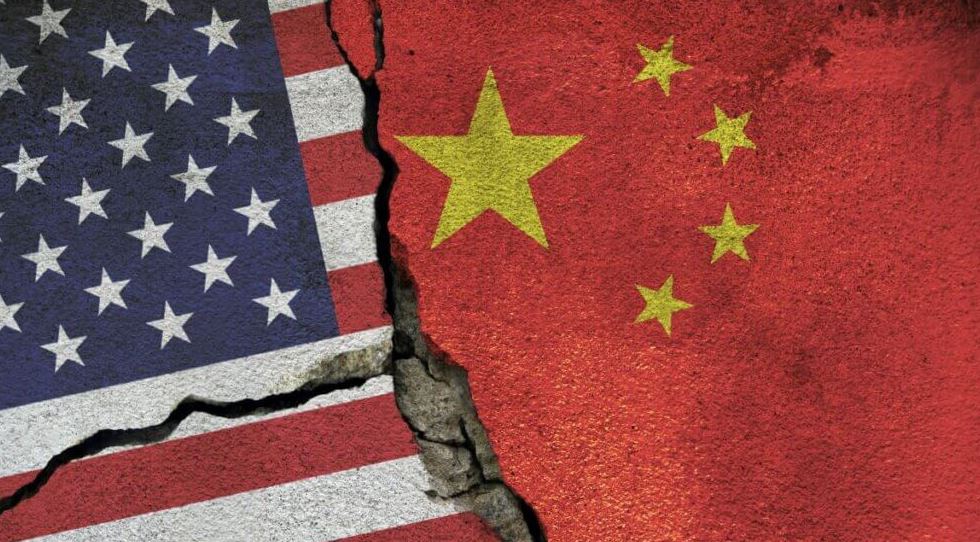
In just two months, two seismic tremors to the principle of state sovereignty have been witnessed, as in January 2026, U.S. special forces forcibly detained Venezuelan President Nicolas Maduro, and in late February, Iranian Supreme Leader Ayatollah Ali Khamenei was assassinated in a U.S.-Israel attack. These were not isolated occurrences, but they marked a new, dangerous phase of hyperpowers being unashamed to attack incumbent leaders of independent states and making examples a legitimate tool of foreign policy. Such developments have revealed the frailty of an already failing, rules-based international order and have provided China with a platform to be on the front line in redefining the concept of sovereignty in the 21st century.
▲Photo: Collected.
The overthrow of Maduro was an ambitious act of the U.S. meddling in the Americas. Those who took part in the operation to capture him, which resulted in the killing of at least 80 Venezuelan citizens and defenders, were done by Washington on narcotic-related grounds, yet they went against the basic tenets of the UN Charter, which prohibited the use of forceful action against sovereign states without the consent of the Security Council. Latin America, Brazil, Chile, and Mexico, among others, had a quick reaction to the move, with countries threatening that sovereignty would be conditional, legitimacy secondary, and that U.S. power would have limited, effective restraints. The removal of Maduro was not just a matter of regime change, but a lesson to the Global South; it was either you fall in line with the U.S., or face consequences.
The killing of Khamenei was still a more chilling message. Having been the head of the independent state, his assassination in a premeditated act was a direct strike against the principle on the basis of which the leader of the state is sacred. During several decades, Khamenei turned Iran into a bastion against U.S. domination over the Middle East, funding the militants of the region and building the nuclear program, which was viewed as an existential threat by Washington. His assassination coincided in the midst of a massive wave of demonstrations in Iran, owing to breakdown in the economy and foreign sanctions, which nevertheless, means that such an assassination was perpetrated without any legal or international authority, and can only serve to bring to the fore a new reality: hyperpowers are now free enough to assassinate foreign leaders whom they feel are hostile.
Both incidents have demonstrated the hypocrisy of the international order, led by the West. The United States and its partners have long preached the principle of sovereignty and non-interference for decades, and violated such principles over and over in nations such as Iraq, Libya, and Syria. Nevertheless, the cases of Maduro and Khamenei can be regarded as a qualitative shift: never had the heads of two giant oil-rich nations been so publicly denounced by a hyperpower over such a brief period. The Global South is receiving the message: sovereignty is not a privilege in the age of the great-power game, but a burden, bestowed only upon those who have really managed to abide by the rules set by the West.
Enter China. Years of positioning itself as the champion of the Global South, China advances the concept of a multipolar world in which no single power dictates the rules of international relations. In recent years, this rhetoric has been followed by action, as China has been deepening its economic and political ties with developing countries through programs like the Belt and Road Initiative, has vetoed foreign intervention into other countries like Syria by the UN Security Council, and held vetoes of Western intervention in other countries like Iran in the UN Security Council. The cases of Maduro and Khamenei have offered China a unique opportunity to advance its hegemony in the Global South, as they claim to be the only major powers concerned with the ideals of sovereignty and non-intervention.
The Chinese approach to sovereignty derives from its history. As the nation that has been the subject of Western imperialism and intervention throughout the 19th and early 20th centuries, China has always considered sovereignty sacred. Such an opinion has been articulated by Chinese leaders like Wang Yi, who has discussed the necessity of ensuring the voice and representation of developing nations in global governance and has also argued that the Global South has the goodwill and the right to be a decisive element in global governance reform. The message China conveys to a majority of sovereign nations in the Global South is very powerful: an alternative to the Western-led order, where sovereignty is not dependent on political orientation but is, instead, an inherent right of each state.
China has already underlined its growing strength with its response to the arrest of Maduro and the death of Khamenei. China was not the last country to condemn the move of the U.S. following the seizure of Maduro and called it a gross violation of international law and the harm to the peace and security in the region. Similarly, after the killing of Khamenei, China also issued a statement stating that it was very much concerned with the establishment and escalation of conflicts in the Middle East and that the sovereignty and the territorial integrity of the states should also be respected. These did not amount to empty rhetoric; they were a message to the Global South that China is willing to confront Western hegemony and that it offers a viable alternative to the current international system.
It will not be easy to see how China will take its place in the battle for the Global South to reclaim its sovereignty. To begin with, China has received its fair share of criticism from Western nations for its own human rights and democratic record, with some arguing that its promotion of sovereignty is a means of ensuring that oppressive nations are not attacked by the international community. Moreover, some countries in the Global South may be too wary to be too close to China, as they fear becoming China’s economic and political counterparts.
After all, Maduro or Khamenei are not the only ones being fought over in the struggle for sovereignty. It is about whether the Global South will be able to assert its right to choose its own destiny without the interference of the hyperpower. In this fight, however, China is becoming the underdog- one that can re-write the rules of international relations in the span of many generations.
This article was first published at Times of Bangladesh, Bangladesh, March 10, 2026,
https://tob.news/the-global-souths-battle-to-reclaim-sovereignty/.
