Rethinking World Order Beyond The West
Time: 2026-02-27 Author: Sujit Kumar Datta
The field of international relations (IR) tells a certain narrative of the world. Beginning in 1648 with the Peace of Westphalia, it was declared the sovereign nation-state and formed the foundation of the modern world order, alongside European diplomatic practice. The two world wars, the Cold War, and the liberal international order of the United States are hence through the power politics of balance. The message is not so conspicuous, but powerful: the West was the creator of the modern world, and others were just its admirers. But this story is incomplete. Decolonising IR means not abandoning the concept of the West but recognising that the world order is not explainable or recreatable through the prism of a single civilisational perspective. The 21st century, however, cannot afford the repetition of the hierarchies of the past, because world politics has never been as rich, plural, and interconnected as the mainstream IR theory would rather have it recognised.
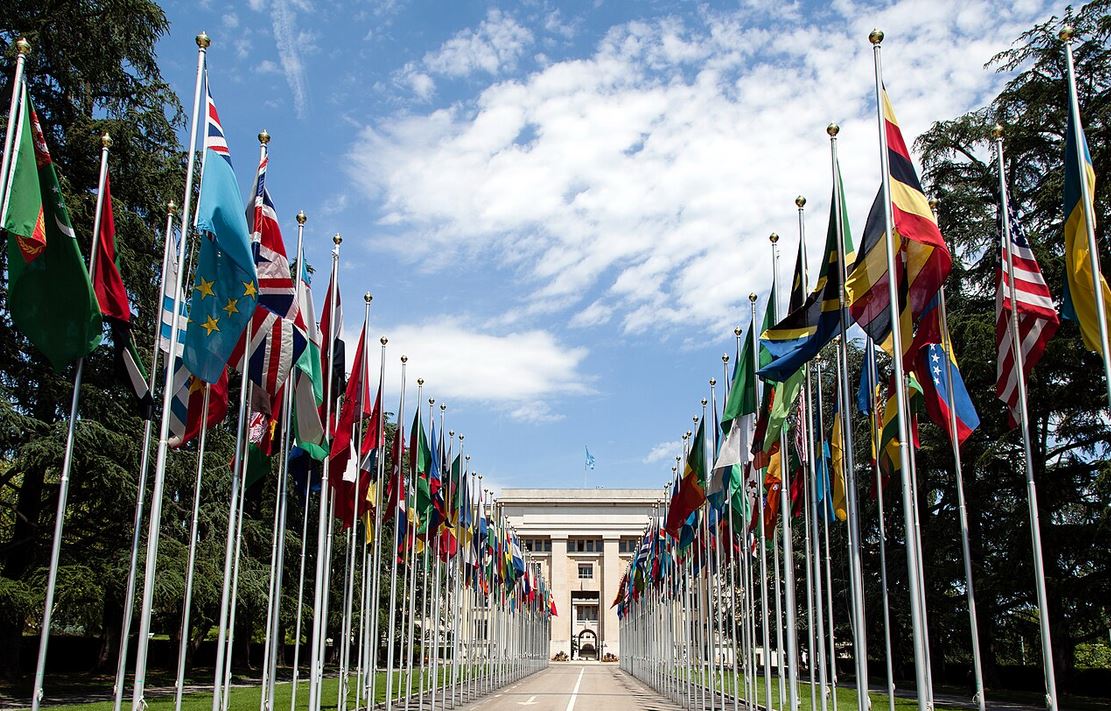
▲(Times of Bangladesh).
Even now, at its core, what is presently called global IR remains to be founded on Western assumptions. The European experience in history has also had a deep impact on the sovereign state, the idea of territorial boundaries, the notion of international law, and even the language of development. The politics of a world order were structured through the Peace of Westphalia, the Enlightenment, and capitalist industrialism. This course gave rise to organisations such as the United Nations, the World Bank, and the International Monetary Fund, and these organisations imposed liberal norms on the mechanisms of global governance. The Asian, African, and American Eastern civilisations had, long before Westphalia, devised superior diplomatic, trade, war, and cooperation networks. These were not primitive and parochial; they were other visions of order. We fail to perceive world politics well without attending to it.
The political philosophy of the Arthashastra of Kautilya articulated a refined version of interstate relations in concentric rings of friends and friends-enemies. It valued strategic competition, emphasising pragmatic unions and economic statecraft. Indian philosophy fused the politics of force with ethical problems into what was known as dharma (ethical duty), meaning that statecraft was not just about survival but an issue of obligation. The Chinese civilisation, shaped by the substantial influence of Confucianism and Legalism, had an alternative understanding of order. Imperial China also had developed extensive trade relations in Asia despite being under the tribute system. These references to this remembrance of civilisations can be traced in the new discussions on multipolarity and other world regulation policies.
The Mesopotamian city-states, situated in the fertile crescent, invented treaties and codes of law thousands of years ago. The agreements among the rulers were inscribed on clay tablets, which invited the gods to serve as mediators of peace. There was a world of negotiated coexistence rather than indefinite chaos, and ancient Egypt was in diplomatic contact with local forces, as demonstrated by the Amarna letters. The Maya, Aztec, and Inca civilisations had built up elaborate political systems, trade connections, and empires on the other side of the Atlantic. One can use the example of the Inca, who governed vast territories using decentralised yet integrated systems that lacked the written script as known in Europe. The political form is a political structure that disrupts the ideals that bureaucratic rationality ought to assume a Western form.
Such experiences of civilisations reveal that there is no significance of order as far as the European system of the nation-state is concerned. Sovereignty, as such, has existed in different forms throughout history, including shared, layered, sacred, or even imperial. The Westphalian model is one of the historical outcomes that do not happen to the entire world. Why does this matter today? It is the reason for the redistribution of authority in the Atlantic world to Asia and the Global South in the 21st century. China and India are new countries not only in economic strength but also in the restoration of intellectual traditions and strategic cultures related to their history. Meanwhile, some parts of the world, such as Africa and Latin America, are challenging conventional development models and insisting on fair representation in world politics.
The IR theory, unless grounded in Western experience, risks misinterpreting these changes. To explain, the existence of liberal democracy as the sole viable mode of political organisation is inconsiderate of other options that arise from the validity of the past, social integrity, or community values. It is not that decolonising IR would lead to the advancement of authoritarianism, but rather that the explanation of political legitimacy as a culturally specific concept, in opposition to the universal one. In some cases, critics have claimed that the focus on civilisation is romantic or amounts to cultural essentialism. Civilisations never remain the same, and they evolve, interweave, and influence one another. The process of decolonisation of IR should not be pro-civilisational chauvinism against Western preeminence. Instead, it demands pluralism- a learning disposition whereby one concedes a range of sources of knowledge.
There are some practical implications of this intellectual shift for Global South countries. It will allow them to make, not take, norms. African countries are not advancing their own interests in promoting climate justice or in pushing Latin American countries to insist on reform of international financial institutions; they are not challenging epistemic hierarchies.
Bangladesh is one such, as it is positioned at the crossroads of climate vulnerability and development aspirations. It has demonstrated that small states can have an impact on dialogue through their diplomacy, which has meddled in climate negotiations. Bangladesh, with its colonial history, liberation struggle, and grassroots formidable power, will be in a position to create other images of solidarity and sustainable development.
The debate in the 21st century is no longer whether the West will become a relic of international politics. It will remain influential. Whether the world order will persist on the basis of a single civilisational narrative or whether it will be a truly plural construction is the question. A decolonised IR would come to understand that the nation-state system represents a much broader human story. The world following old hierarchies is under threat of disintegration and mistrust. The civilisation discourse world has had a chance of creating a more accommodative order- a place where the South will play a role in helping to shape norms and institutions, and the future. This is followed by the decolonisation of International Relations, which is not a luxury of academia. It is a political necessity. The fact that we are re-inventing world order without the West is irrelevant to the role of the West in the context of the bigger human tradition, but only comes into play with the role of the West.
In so doing, we have an assurance that global IR is European and North American, but also Asian, African, and South American. The 21st century simply cannot exist without some intellectual awakening, which will recognise that the world has always been and will remain multipolar in thought, even when it was not in power.
This article was first published at Times of Bangladesh, Bangladesh, February.27, 2026,
