Is Multipolarity More Stable than U.S. Dominance?
Time: 2026-02-21 Author: Sujit Kumar Datta
The global order is shifting. Over the past eight decades, the United States has been at the centre of the creation of norms, alliances, and the international system’s economic and security architecture. The order of the day since the post-World War II period has been U.S. hegemony, whether in the Bretton Woods institutions, NATO, the proliferation of democracy, or the web of markets of globalisation. But the idea of a multipolar world in which power is shared among the various forces of significant interest is becoming a reality with the emergence of China, the resurgence of Russia, and the rise of regional powers such as India, Brazil, and Turkey. The question now raised by policymakers, scholars, and even citizens is easy to address but serious: Is multipolarity a superior world to U.S. dominance?
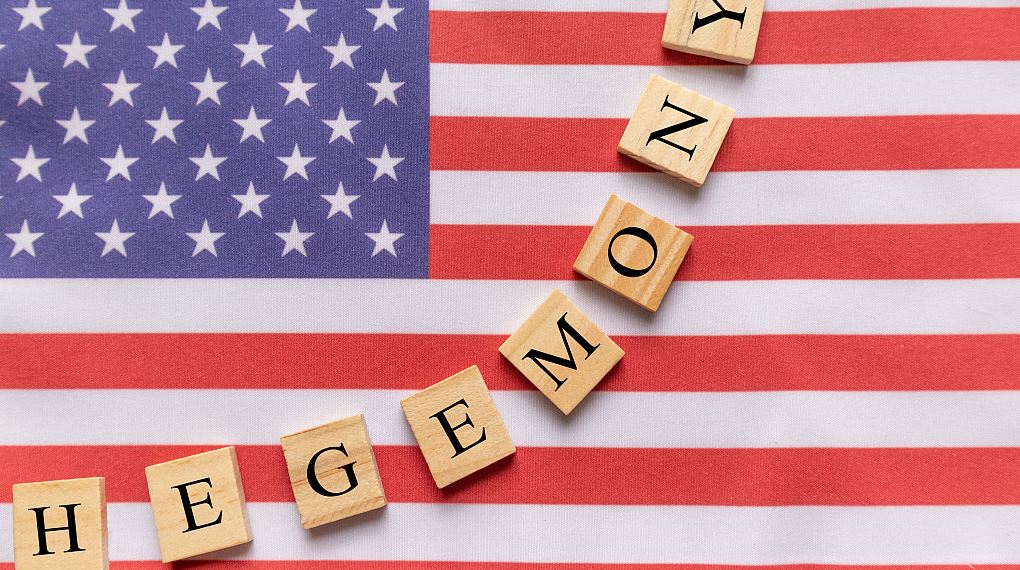
▲(Times of Bangladesh).
The United States has, over the decades, played primus inter pares–first among equals and has created a liberal order founded on an open market, common norms, and collective security. This hypothetical international stability is called hegemonic stability: according to the theory, the peace would be provided by one of the actors. If one actor is infinitely more powerful than the others, that actor could prevent large-scale warfare, impose policies on the others, and serve as a guarantor. This has been supported. The U.S. post-war hegemony of 1945-1991 was associated with the longest period of the great-power war since the Second World War. During the Cold War, it was a bipolar world, and even then, the U.S. was assuming the role of an anchor in the democratic world. American hegemony appeared unaffected by the fall of the Soviet Union. Great power wars were severe and lacking. Trade flourished. American security assurances had been sucked out in part of nuclear proliferation. With American leadership, the World Bank, IMF, and WTO established foreseeable trends in economic interrelation that the majority of developing countries took advantage of during their development.
Tension does not go hand in hand with stability under dominance. According to the clients, the American hegemony introduced imbalance and resentment. Unilateralism was the accusation that dogged the U.S. since many states hate its intervention into Iraq, Afghanistan, Libya, among others, without the noble approval of the world community, and this dented the U.S. credibility. The order was perceived by some countries as giving preference to Western interests, and the U.S. leadership in economic globalisation was harsh and unfair at the expense of poor nations.
Besides, power can be weak. The problems of overextension and financial crisis, and of political polarisation at home, can be devastating to the hegemon’s capacity to emerge as a leader overseas. Admittedly, U.S. leaders at one time did fail, exactly because of the internalised orientation towards domestic affairs. The financial crisis of 2008 and the political realignments in the U.S. in 2016, such as the distrust of multilateral institutions, were signs of cracks in the veneer of invincible leadership.
Therefore, despite the fact that the U.S. hegemony is known to have created stability, it did not go without tensions, marginalisation, and extreme instability.
Multipolarity implies that the world has several power centres, including the United States, China, the European Union, India, and Russia, as well as regional blocs in Africa and Latin America. It is specifically the dispersion of power, the protection against the dominance of a single party, and the formation of many webs of cooperation that contribute to the increased stability of such a system, as the supporters believe. Theoretically, multipolarity promotes a balance: each power will not be willing to dictate easily, and thus states will be motivated to bargain, negotiate, and seek allies. The competition is not too strong and more functional-there is less possibility of wholesale destruction by the war. The economic interdependence of various actors may result in webs of mutual interest, and the best way to address it is through peace. The multipolarity also gives different voices a place. It is more likely that the work and development of both developed and developing countries will lead to the establishment of norms and institutions. Such nations as India and Brazil, which have never managed to stand at the top of the world’s powers, are now permitted to express their own requests and even interest in resolving issues in climate, trade, technology, and security.
This model offers a more democratic world order, not a domestic meaning of democracy, but a pluralistic world order with multiple powers accountable and responsible.
This article was first published at Times of Bangladesh, Bangladesh, February.18, 2026,
https://tob.news/is-multipolarity-more-stable-than-u-s-dominance/.
