U.S. Military Build-up and The Nuclear Diplomacy Limits
Time: 2026-02-15 Author: Sujit Kumar Datta
Once again, it is a game of brinkmanship in the Persian Gulf. This means that the delicate system of nuclear diplomacy is undergoing the worst test since the U.S. military troops are increasing dramatically. Not a month has passed yet since the hideous killings of the thousands of protestors in the streets of various cities in Iran, that the atmosphere of Tehran and that of Washington are not filled with the scent of reconciliation but with the icy scent of the scaring and Actionism.
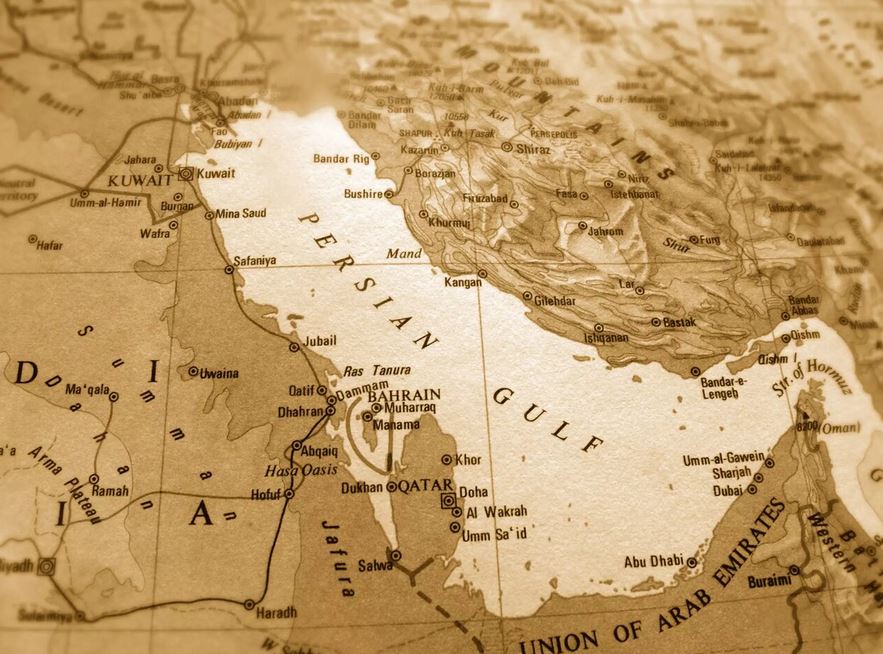
▲Photo: Collected.
It is a moment of a terrible clash of the two opposing elements, the U.S government that is triangulating the idea of military and economic coercion over its scheme of America First, and the Iranian government that thinks the idea of respect for the phenomenon is a condition for a dialogue. The Iranian people – in between, the limbo-bound and weary ones – whose dreams have been crossfired by a twenty-three-year diplomatic stalemate are there in the middle.
The recent request by the president of Afghanistan, Masoud Pezeshkian, to the U.S. to observe Iran’s rights under the Non-Proliferation Treaty (NPT) is a classic case of normative signaling. He said that the Iranian nation had always reacted to respect with respect, but it could not oppose the language of force. But the truth on the ground is that force has become the primary rhetoric of this involvement.
The move by the Trump administration to send more military forces to the Gulf, along with greater pressure on the nuclear desires of Iran and its crackdown on internal dissent, is a classic Neo-Mercantilist trend. This is not a priority for the relative power and national interests of states, but rather the collective survival of international institutions, as discussed in my recent study of the crisis of the liberal order. Washington is seeking to master the rules of engagement by engaging in transactional diplomacy, militarising, and imposing economic sanctions.
The threats from Tehran have become increasingly apathetic. The warning by Major General Abdolrahim Mousavi that the whole region would be engulfed in conflict in case Iran is attacked is a sobering statement of the weaponised interdependence that characterises modern geopolitics. Iran claims that it is ready to engage in a long-term war, with the military command arguing that although it does nothing to seek regional conflagration, any attack would be meted out by the warmongers.
This Actionism, or a requirement of preparation and hard work, resembles the CPC method of political success, which I have examined. This is manifested in Tehran through what is known as Strategic Autonomy, in which the competition is re-centralised in the state to endure in an unfriendly climate. When Iranian Foreign Minister Abbas Araghchi points to the U.S. fleet and insists on saying that the U.S. fleet does not scare us, he is not speaking of bravado; it is more a civilisational determination of independence, which has so far been the staple of the Islamic Republic since 1979.
The generals and diplomats are exchanging threats, but the major casualty of this inertia in geopolitics is the average Iranian. It is already too late in the life of such citizens as Saman, who, during the last twenty years, has witnessed how the nuclear negotiations drag on and on. It is ironic that the young people born at the beginning of these negotiations are now the ones being hit by the upheaval and economic collapse.
The Iranian economy is spiraling down with a crashing national currency and skyrocketing prices. The reaction of the state in terms of the broadcasting of confessions that domestic protestors are associated with the foreign intelligence services, such as Mossad, is a way of securitising the internal crisis. With the dissent being interpreted as a consequence of foreign terrorists, the state attempts to preserve the Dharma of social balance, which many people would claim as a false interpretation of morality being ethically obligated to the state in order to keep it alive.
The current crisis shows that the so-called Liberal Economic Order and its instruments of diplomacy are not working. The U.S. unilateral sanctions and military build-ups have created an epistemic blind spot. Washington is banking on the fact that sufficient pressure will result in a shift back to market rationality or diplomatic compliance. But as observed through the prism of ‘Global IR,’ states such as Iran tend not to take these pressures as a call to negotiate but as a predatory threat to their civilisational sovereignty.
We are experiencing the boundaries of a world order constructed around the basis of ‘Institutional Hegemony.’ The U.S. military build-up would only provide a short-term tactical benefit but would never help solve a crisis that has taken close to two decades of suspicion between the parties.
Another option that would end this cycle is the way out, which would also end the rhetoric of force and recognise the Strategic Autonomy of each player. We need to identify pluralistic solutions because, as I argue in my own article on the decolonisation of IR, they do not harbour Western universalism but rather so-called civilisational ethics.
Signing of the ‘Mother of All Deals’ to the Middle East will not be done under the umbrella of an aircraft carrier. It will necessitate a major reconsideration of the concept of our sense of security and respect in the multipolar world. Until then, the region remains a tinderbox, and the inhabitants of such territories continue in the decades-long tragedy of the commons.
This article was first published at Times of Bangladesh, Bangladesh, February 10, 2026,
https://tob.news/u-s-military-build-up-and-the-nuclear-diplomacy-limits/.
